EEG in stroke rehab: Neurotech's proving ground
Only 5–20% of stroke survivors regain full hand dexterity in six months — EEG-BCI is racing to close that gap while neuroplasticity is highest.
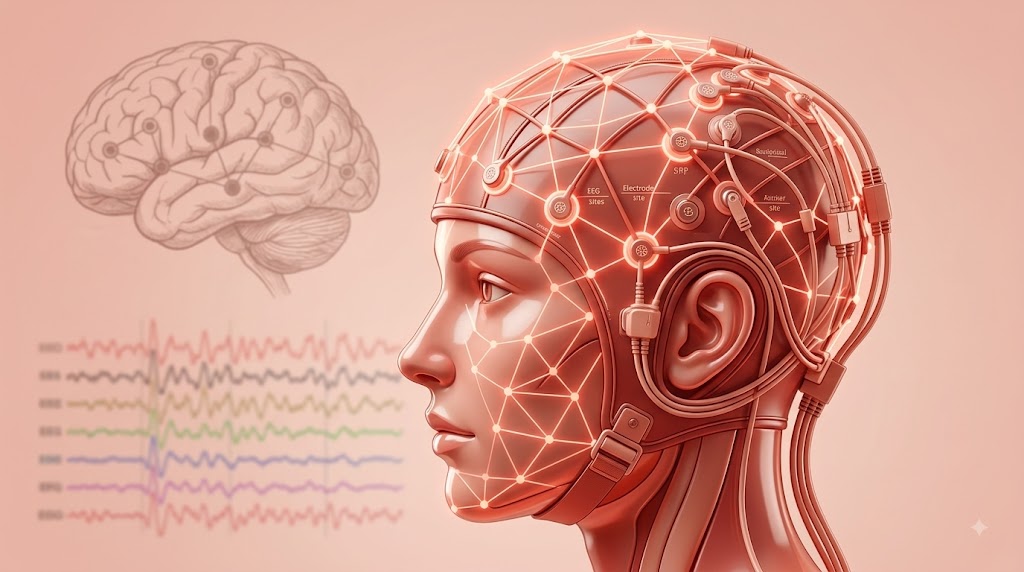
Stroke remains one of the largest sources of long-term disability worldwide. Between 1990 and 2021, global stroke incidence rose 70%, and prevalence climbed 86%. The World Stroke Organization, working from the Global Burden of Disease 2021 dataset, projects annual stroke deaths will rise from 6.6 million in 2020 to 9.7 million by 2050. Upper-limb impairment affects roughly 70% of survivors, and only 5–20% recover full dexterity within six months.
That burden, combined with the narrow post-stroke window in which the brain is most receptive to reorganization; is why stroke rehabilitation has become one of the most active current applications of EEG and brain-computer interface (BCI) technology, alongside a second, fast-growing vertical: EEG-based training for sports performance.
EEG has emerged as the instrumentation of choice for translating neuroplasticity research into deployable rehabilitation systems.
The neuroplasticity problem conventional therapy can't solve.
Standard post-stroke motor rehabilitation depends on repetitive movement: therapist-guided limb work, task practice, resistance training. Its limitation is mechanistic; passive, therapist-driven movement produces weaker neuroplastic change than active, voluntary motor engagement. For many stroke survivors, voluntary movement is exactly what the injury has removed.
EEG-based BCI systems close that gap by detecting the intention to move; the neural signature of an attempted movement, even when no movement is physically possible. In a controlled clinical study of 54 hemiparetic stroke patients, 89% could operate a motor-imagery BCI above chance level, and patients using EEG-BCI with robotic feedback showed significantly greater Fugl-Meyer Assessment (FMA) gains than those receiving robotic movement therapy alone.
Motor imagery, mentally simulating a movement without executing it, activates motor-cortex patterns that partially overlap with those of real movement, and it is EEG's millisecond-scale temporal resolution that makes it possible to detect that activation and feed it back to the patient in real time.
Why EEG, specifically?
Among the neuroimaging modalities used in rehabilitation research: EEG, MEG, fMRI, fNIRS; EEG is the one that consistently reaches the bedside. It is non-invasive, portable, low-cost relative to MRI-based systems, and fast enough to support closed-loop feedback, a combination no other modality currently matches. A 2024 bibliometric analysis of EEG-BCI rehabilitation literature spanning 2013–2023 found publication volume in this space has grown steadily across the decade, with motor and neurorehabilitation applications forming the dominant research cluster.
The research infrastructure behind the growth
This is not a niche research interest. It is being built into standing clinical & academic infrastructure across multiple countries:
- Germany — Charité – Universitätsmedizin, Berlin runs its stroke research through the Center for Stroke Research Berlin (CSB), which coordinates the Berlin Stroke Alliance, a consortium of more than 40 stroke care providers.
- Spain — Instituto Cajal (CSIC), Madrid runs a dedicated Neural Engineering Lab studying EEG-based biomarkers, muscle-synergy metrics, and BCI applications for stroke and spinal cord injury recovery. Cajal-affiliated researchers have also published a widely cited review establishing EEG as a low-cost, non-invasive method for tracking cortical reorganization after stroke.
- Portugal — The Technical University of Lisbon began a randomized crossover clinical trial in January 2026 (NOISyS), testing EEG-based BCI combined with virtual reality for upper-limb stroke rehabilitation.
- Singapore — A 2026 prospective feasibility study is evaluating EEG-BCI rehabilitation, pairing motor-intent decoding with functional electrical stimulation and VR feedback during the acute and subacute phase of stroke (2–12 weeks post-stroke), when neuroplasticity is highest, alongside a formal cost-utility analysis against historical rehabilitation registries.
- China — Tsinghua University researchers have published channel-selection and signal-topography work refining how EEG-BCI systems localize motor intent in stroke patients, whose neural signatures often shift location as the brain reorganizes.
Beyond the clinic: EEG's other sought-after frontier: Sports
Stroke rehabilitation isn't the only vertical pulling EEG out of the lab. Elite sports performance training has become a parallel growth area for the same underlying technology. A 2025 systematic review and meta-analysis in the Scandinavian Journal of Medicine & Science in Sports found that EEG neurofeedback training measurably speeds the acquisition of complex motor skills in athletes. Sport-specific applications now span golf putting, attention control in shooting sports, and free-throw accuracy in basketball, with a 2025 review of 24 studies spanning national- and international-level athletes finding EEG neurofeedback protocols increasingly tailored by frequency band (SMR, beta, theta) and by sport discipline.
The common thread across stroke rehabilitation and sports performance is the same technical advantage: EEG's temporal resolution and portability make it the only widely deployable modality that can feed a person's own real-time brain state back to them; whether the goal is relearning a lost movement or refining an elite one.
Extending the recovery window: portable EEG at home
Stroke rehabilitation is bottlenecked by access. In-patient therapy is intensive but short; out-patient sessions are limited. The period of greatest neuroplastic potential, the weeks immediately following stroke, is also the period when clinical access is scarcest. Wearable, non-invasive EEG systems designed for supervised home use extend the therapy window by enabling additional daily practice sessions without adding clinical staffing burden. This is a response to a structural constraint, not a technological one.
Where this is heading
None of this displaces the rehabilitation therapist. What EEG-BCI systems add is measurement precision: the ability to detect when a patient's brain is in the state required for motor learning, deliver feedback synchronized to that exact moment, and track recovery as a change in cortical signal rather than only a change in behavior. Stroke rehabilitation and sports performance are, right now, the two clearest proof points that this precision translates into results outside the research lab; and the reason both are becoming the most closely watched application areas in EEG and BCI research today.
Know More:
[1] World Stroke Organization: Global Stroke Fact Sheet 2025. https://journals.sagepub.com/doi/10.1177/17474930241308142
[2] GBD 2021 Stroke Risk Factor Collaborators. Global burden of stroke: dynamic estimates to inform action. Lancet Neurology, 2024. https://www.thelancet.com/journals/laneur/article/PIIS1474-4422(24)00363-6/abstract
[3] Motor Imagery BCI-Assisted Upper Limb Neurorehabilitation for Acute Stroke: Feasibility Study Protocol. J. Clin. Med., 2026. https://doi.org/10.3390/jcm15145692
[4] Clinical study of neurorehabilitation in stroke using EEG-based motor imagery BCI with robotic feedback. IEEE Xplore. https://ieeexplore.ieee.org/document/5626782/
[5] Brain-computer interface with somatosensory feedback improves functional recovery from severe hemiplegia due to chronic stroke. https://www.ncbi.nlm.nih.gov/pmc/articles/PMC4083225/
[6] Electroencephalography-Based Brain-Computer Interfaces in Rehabilitation: A Bibliometric Analysis (2013–2023). https://www.ncbi.nlm.nih.gov/pmc/articles/PMC11598414/
[7] Center for Stroke Research Berlin, Charité – Universitätsmedizin Berlin. https://schlaganfallcentrum.charite.de/en/
[8] Magnetic Brain Stimulation and Computer-based Motor Training for Rehabilitation After Stroke. ClinicalTrials.gov NCT06116942. https://clinicaltrials.gov/study/NCT06116942
[9] Electroencephalography as a post-stroke assessment method: An updated review. PubMed. https://pubmed.ncbi.nlm.nih.gov/25288536/
[10] BCI With Virtual Reality for Stroke Rehabilitation: A Crossover Study (NOISyS). ClinicalTrials.gov NCT07374276. https://clinicaltrials.gov/study/NCT07374276
[11] Brain-Computer Interface Channel-Selection Strategy Based on Analysis of Event-Related Desynchronization Topography in Stroke Patients. https://www.ncbi.nlm.nih.gov/pmc/articles/PMC6735216/
[12] The Effect of EEG Neurofeedback Training on Sport Performance: A Systematic Review and Meta-Analysis. Scand. J. Med. Sci. Sports, 2025. https://onlinelibrary.wiley.com/doi/10.1111/sms.70055
[13] Effects of EEG neurofeedback and training interventions on golf putting performance. Frontiers in Psychology, 2026. https://www.frontiersin.org/journals/psychology/articles/10.3389/fpsyg.2026.1736851/full
[14] Effects of real-time EEG neurofeedback training in elite athletes: systematic review and meta-analysis, 2025. https://reference-global.com/article/10.2478/bhk-2025-0024
Further reading





Subscribe to Neurotech Pulse
A roundup of the latest in neurotech covering breakthroughs, products, trials, funding, approvals, and industry trends straight to your inbox.