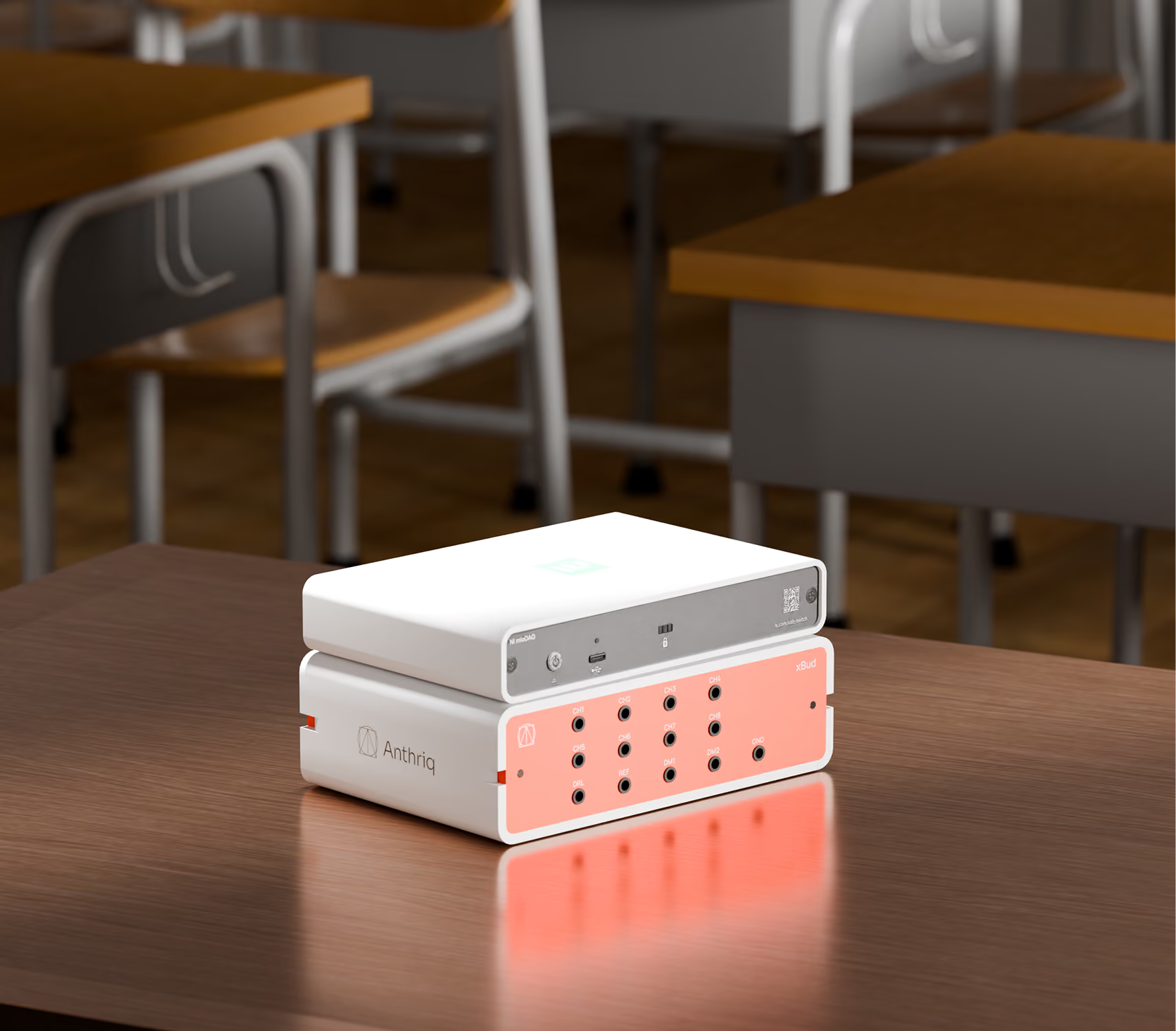
xBud
The Biosignal Starter Toolkit.
A structured hands-on teaching built to support capstone projects, rigorous scientific experiments, and non-invasive BCI prototyping.
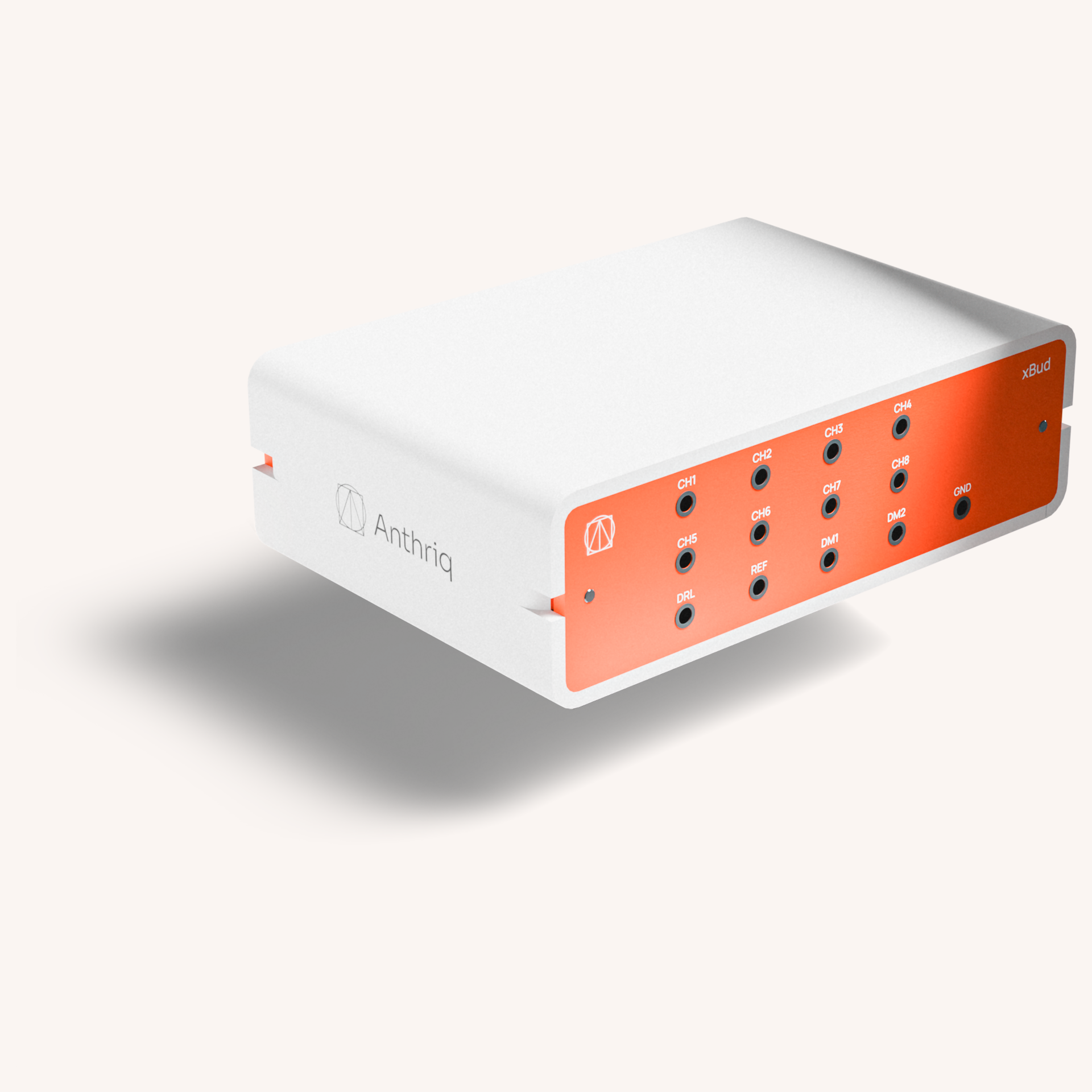
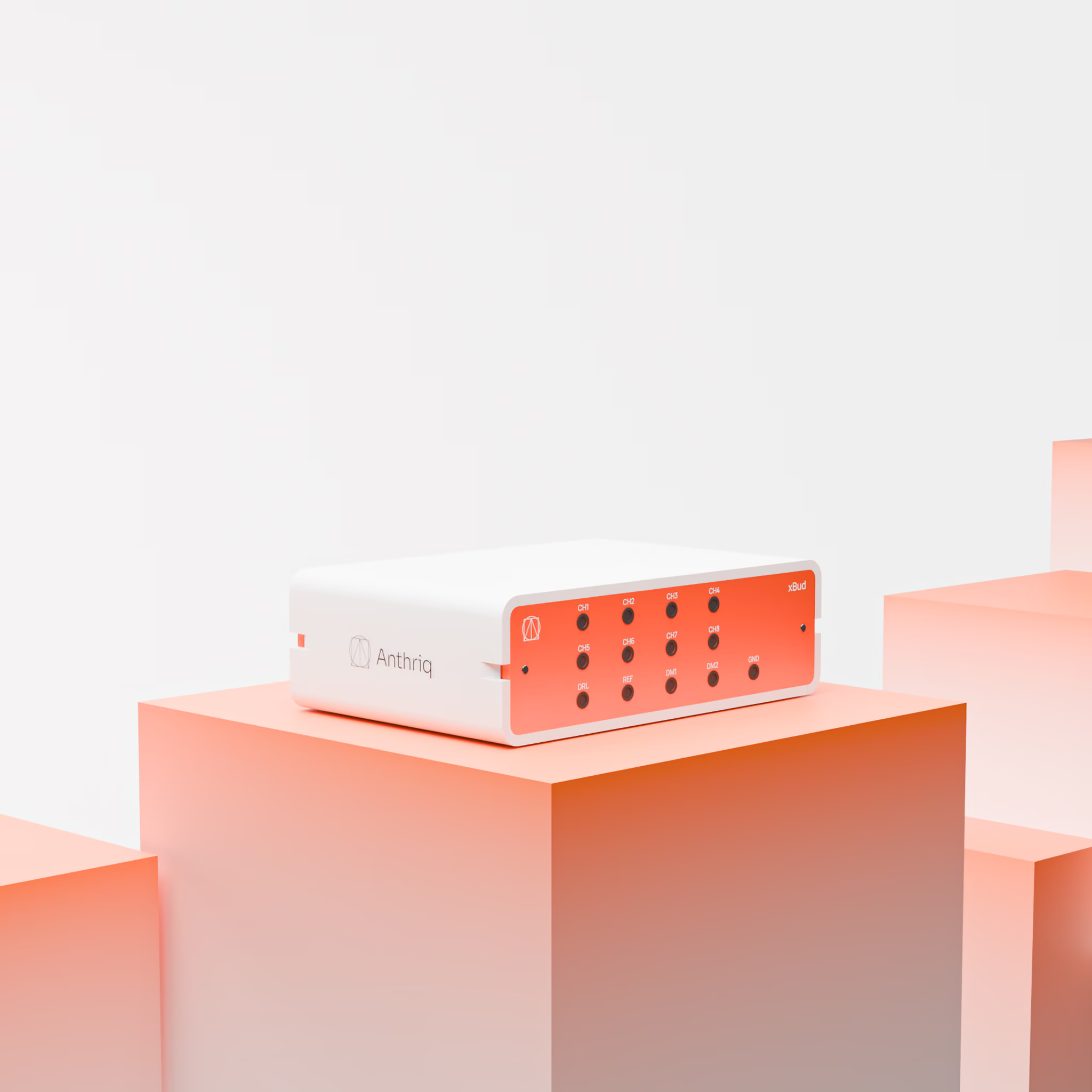
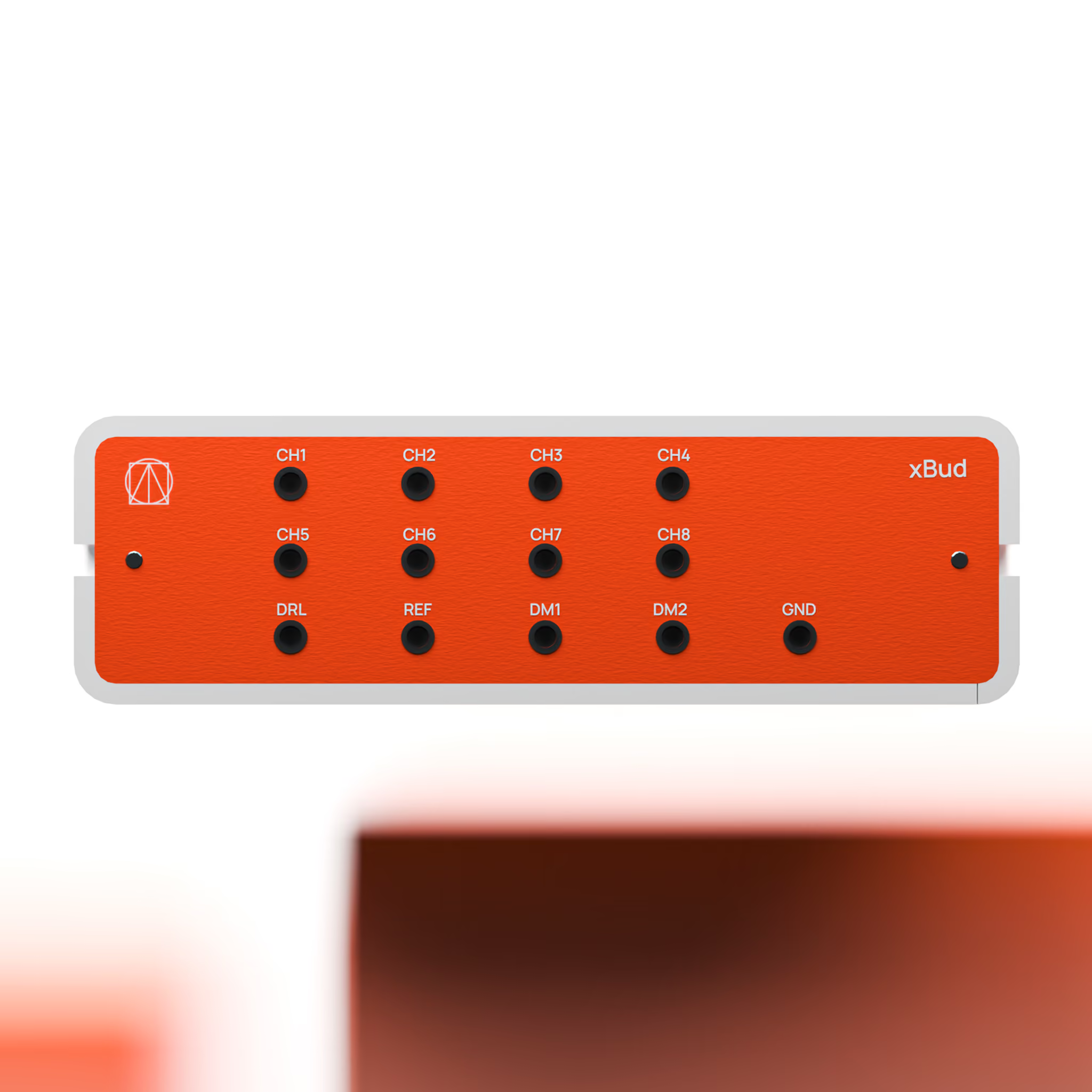
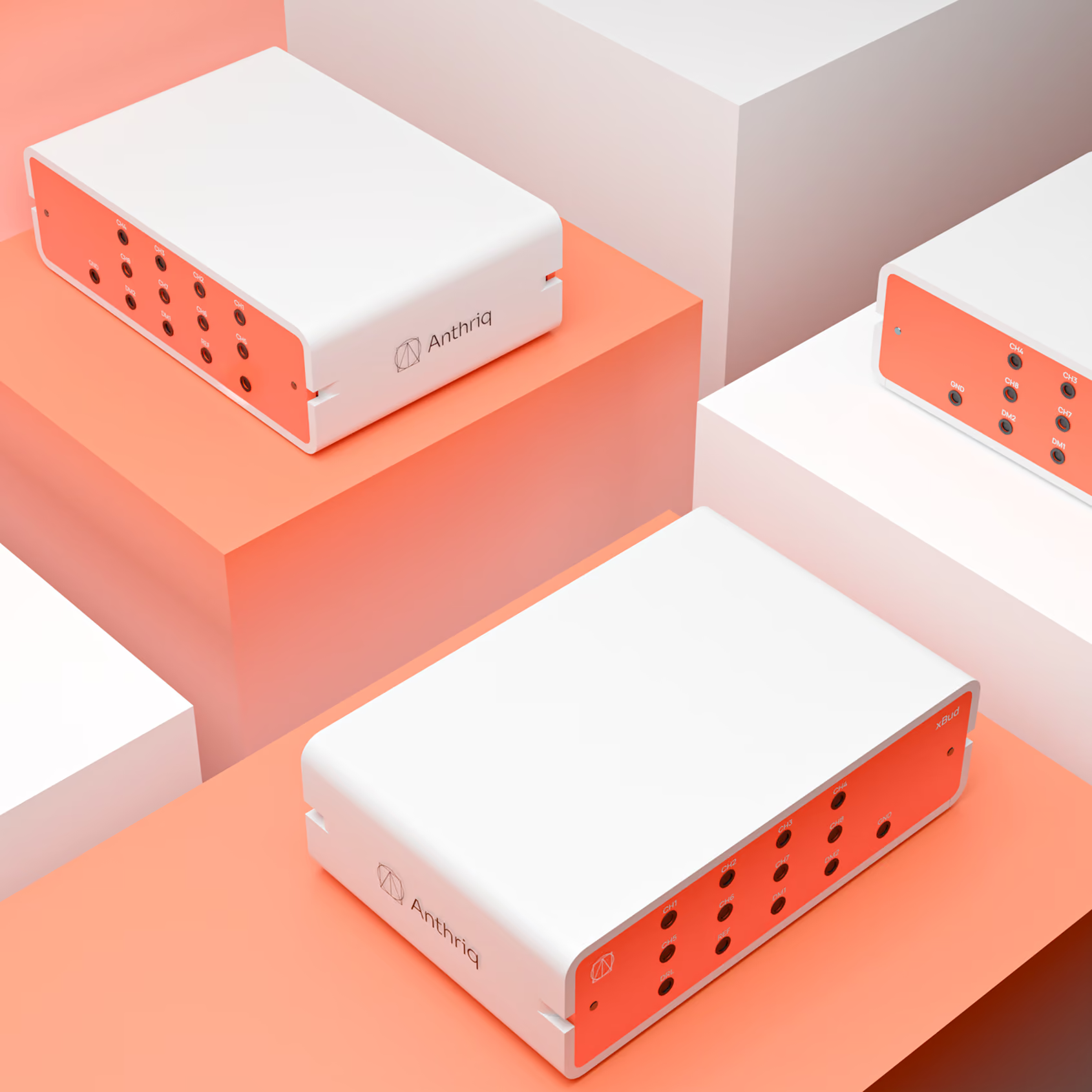
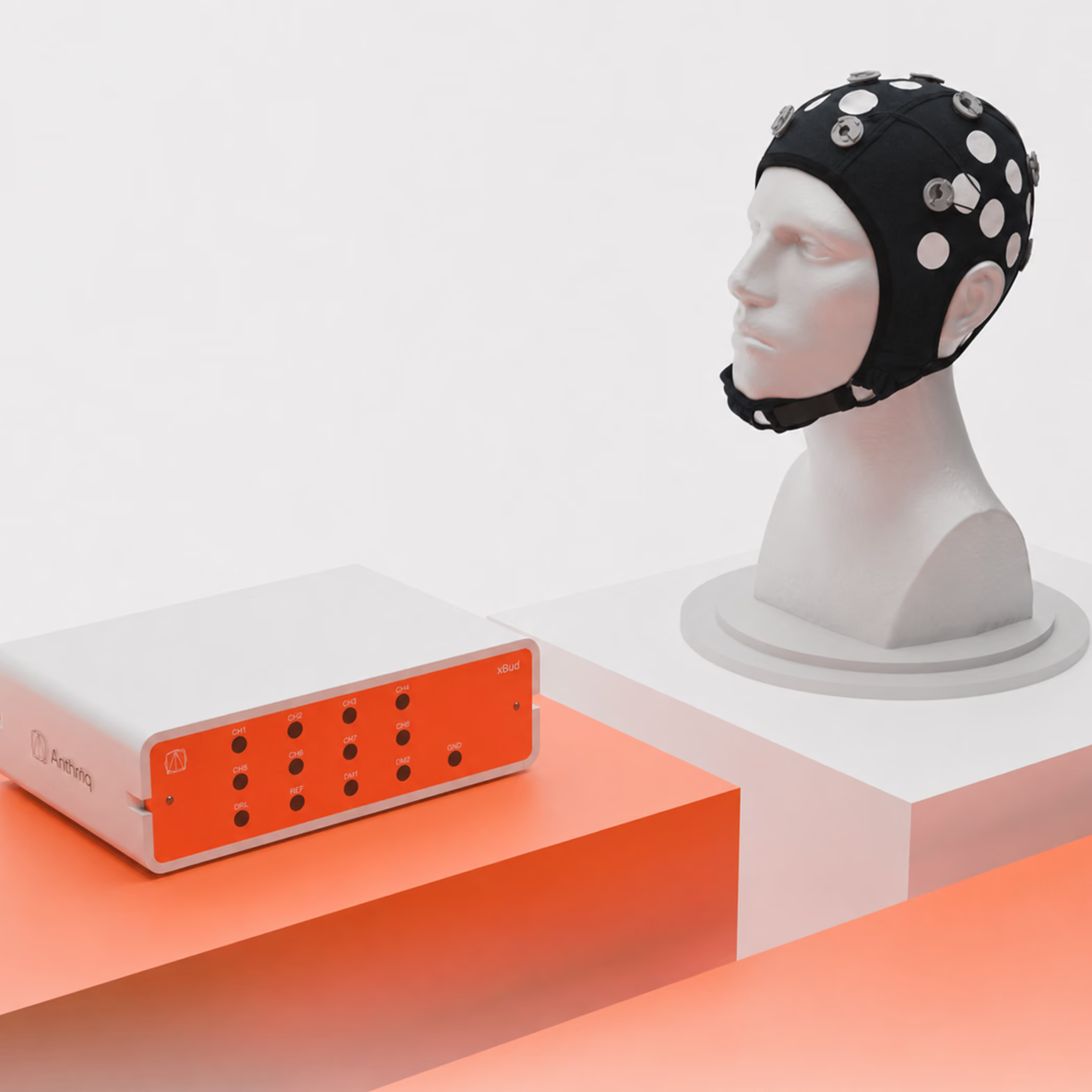
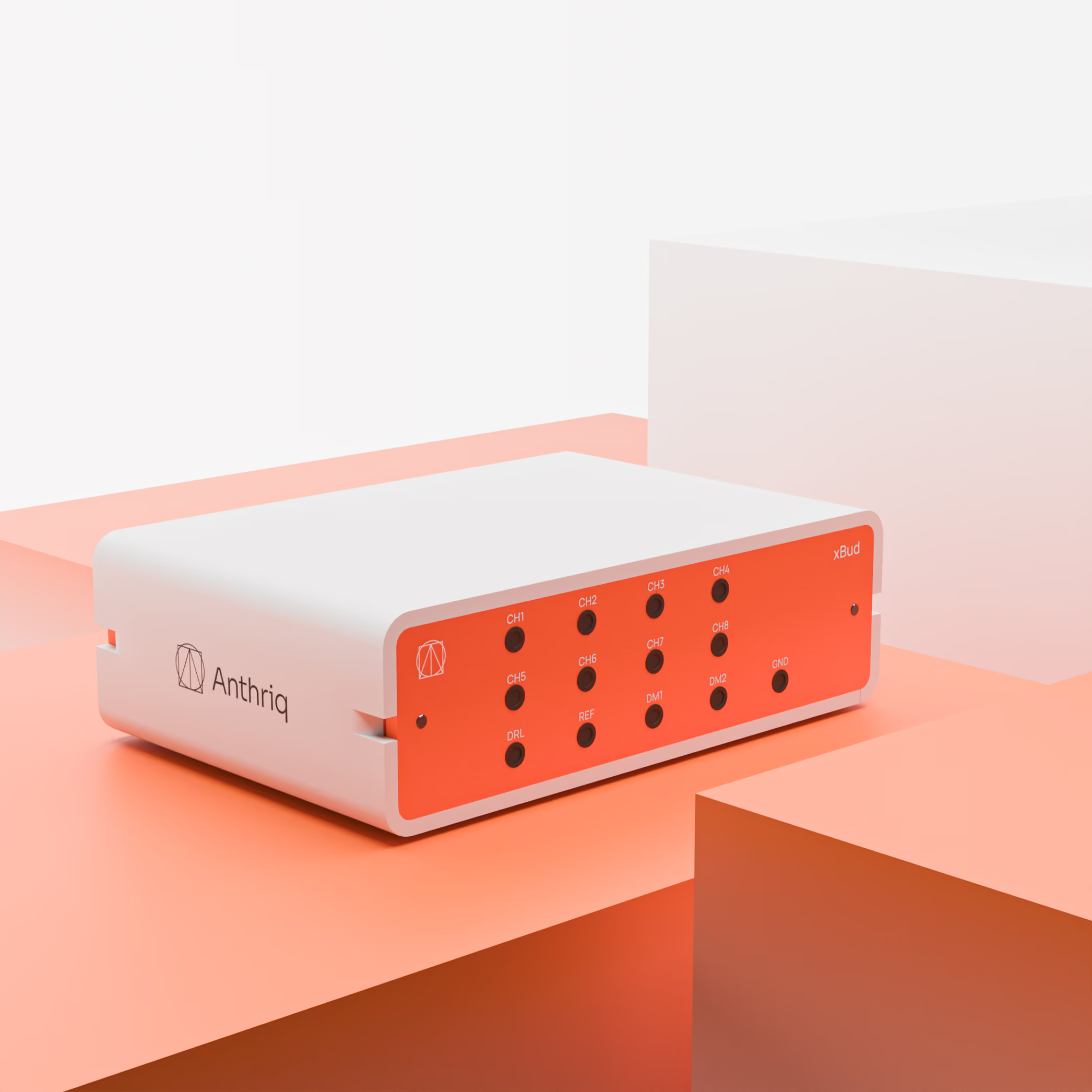
Engineered for real biosignal learning.
Multimodal EEG, ECG, and EMG acquisition, real data, curriculum alignment, and a professional biosignal acquisition workflow — in one neurotechnology device.
Modular in Design
Available in multi-channel configurations to match your curriculum stage or budget.
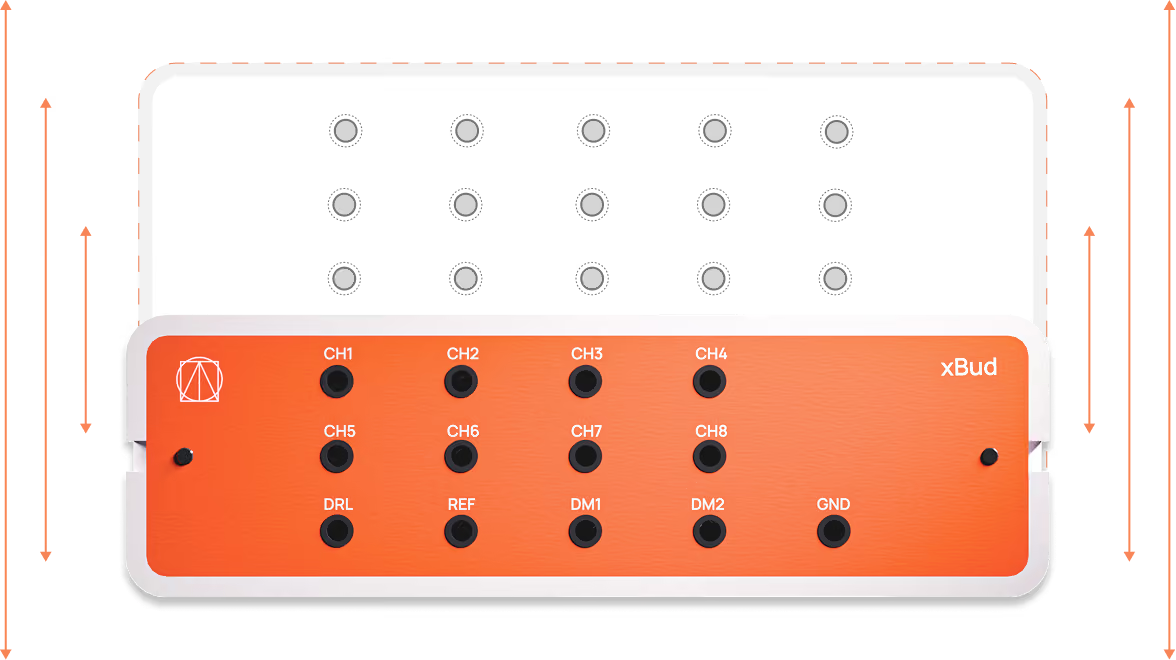
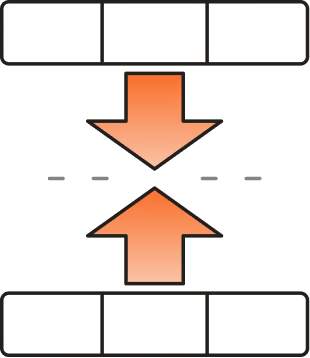
Compact, Portable and Easy to Use
Minimal infrastructure, minimal footprint. xBud connects to a host PC via supported DAQ over USB-C — no complex rig. Setup in minutes, signal on screen.


One Pipeline. One Environment.
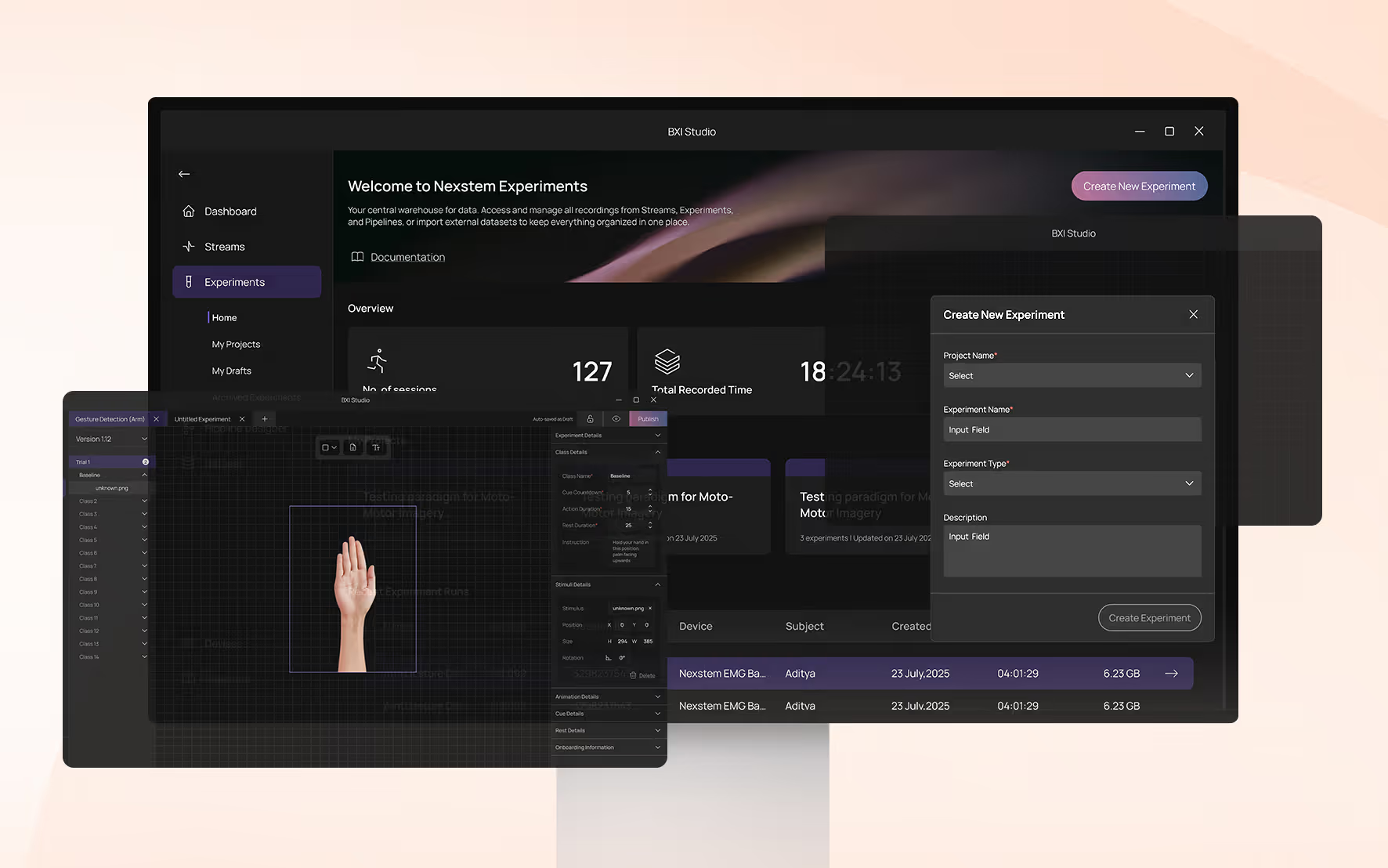
BXI Studio handles streaming, filtering, visualisation, and experiment orchestration in one workflow
Programmable gain & bandwidth
Capture clean, reliable signals without the hassle of gels or skin prep.
Active noise cancellation
Power longer recording sessions with a swappable battery system designed for minimal downtime.

What xBud brings
to the lab
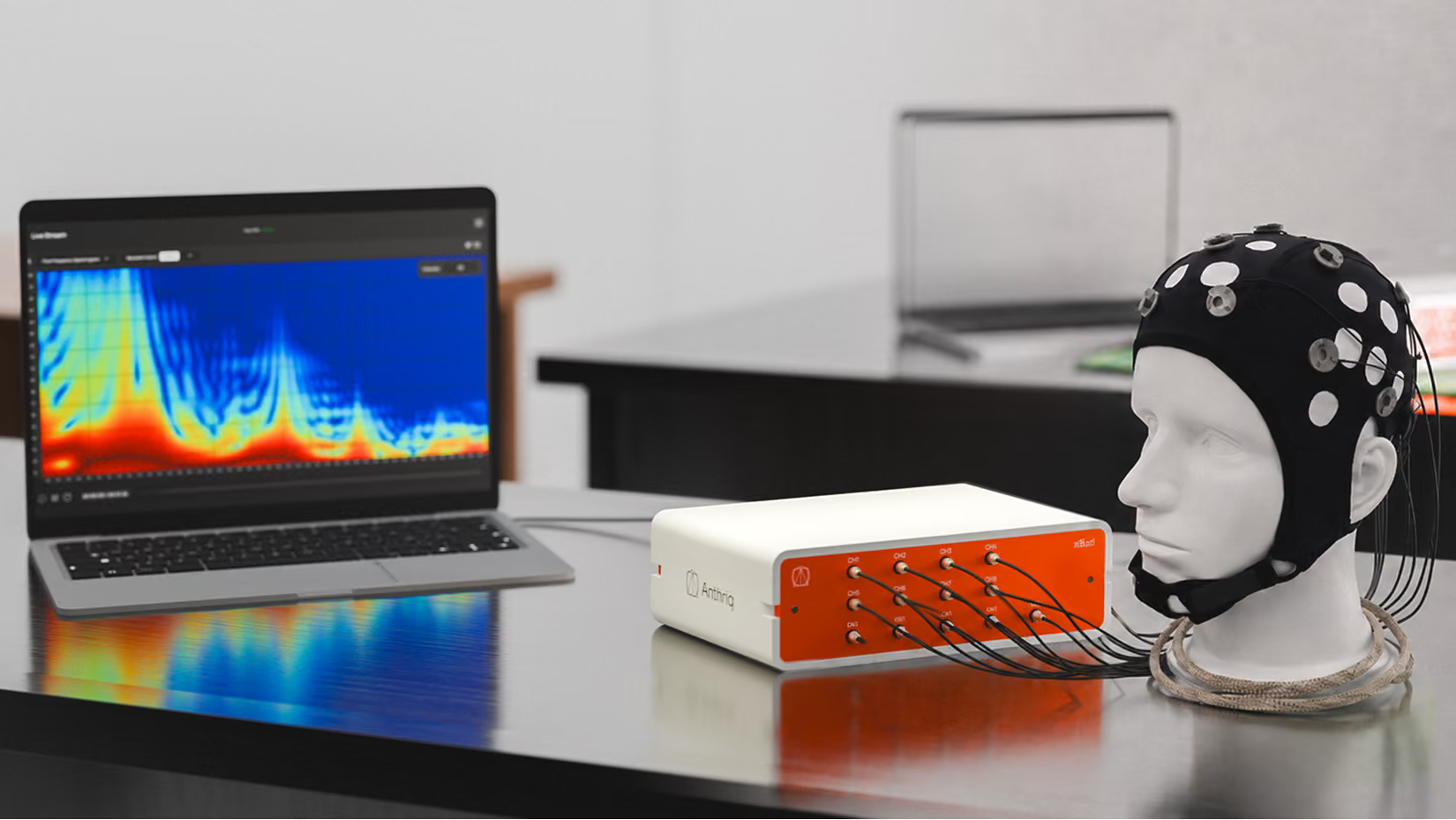
Active Acquisition. Active Learning
xBud moves learning from passive observation to active acquisition — students collect their first real biosignal, setting the foundation for real-world biomedical instrumentation practice.
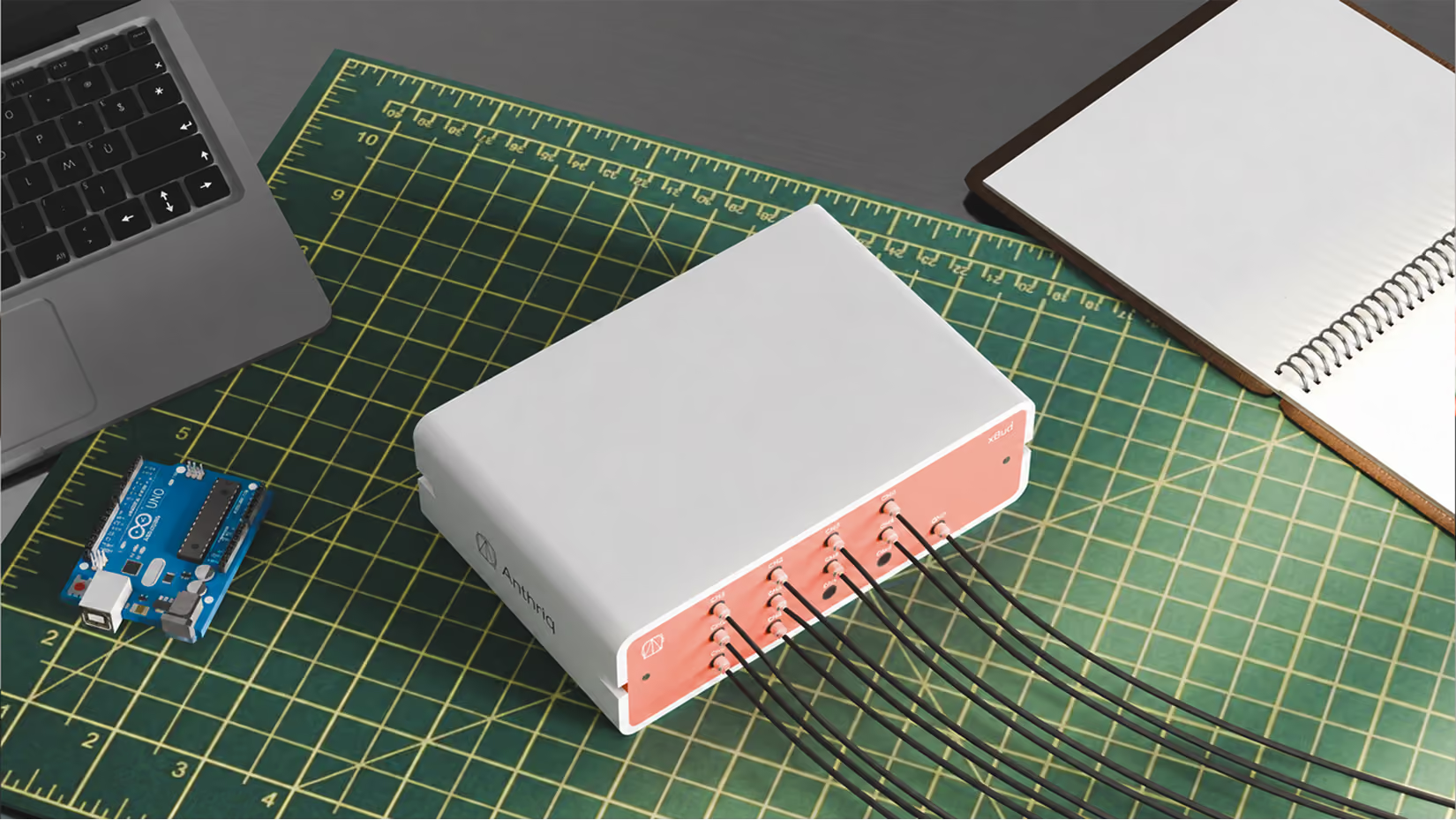
Teaching Kit. Fit for prototyping & capstone projects
Rigorous enough for capstone projects: CMRR, noise calculation, live acquisition — filter, extract, and classify using biosignals you collected. Teach basics of ML & data analytics, all using a single device.
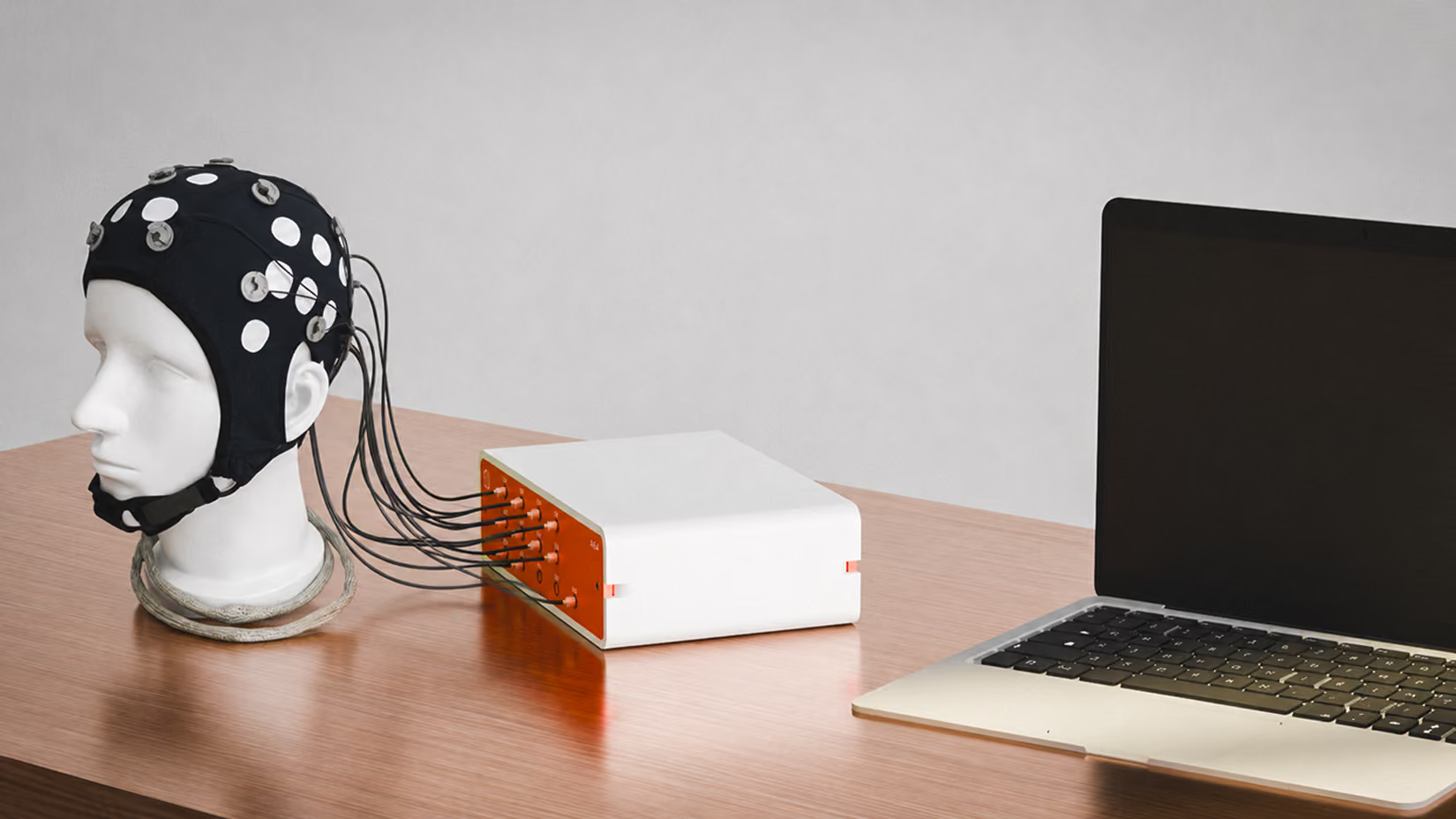
Industry Workflow From Day One
Structured around the acquisition chain used in professional research from biopotential basics to ML classification with modules that map directly to BME, EE, and Instrumentation outcomes.
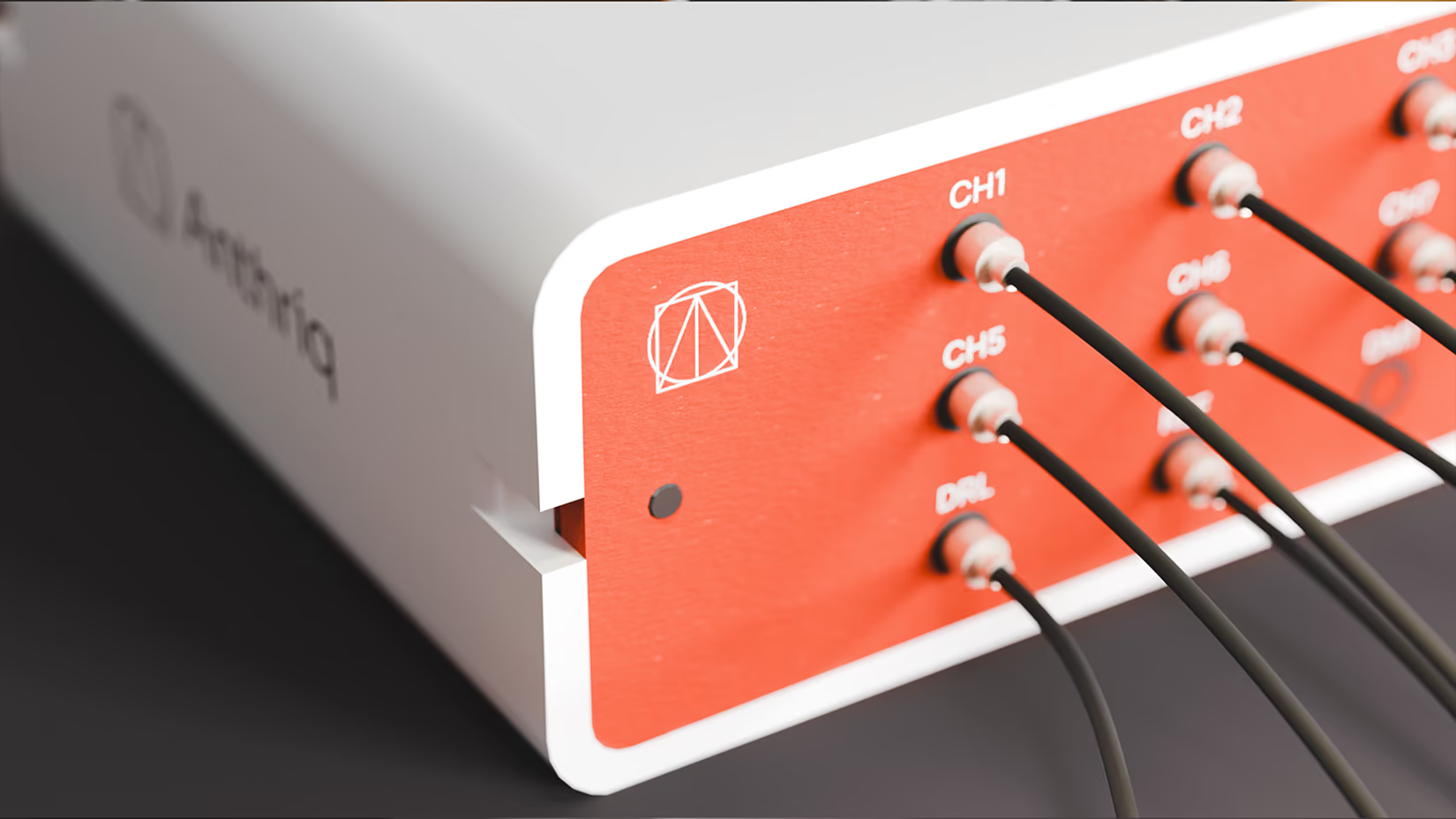
Research Grade Acquisition
500× gain amplification, active noise cancellation, and high signal fidelity — capturing biopotentials as low as ~1 µV without compromise.
xBud at work
Technical Specifications
EXG Channels
4/8/12/16
Electrode Type
Ag/AgCl dry polymer active electrodes
Sampling Rate
4 kS/s
Low Pass Cutoff
500 Hz
High Pass Cutoff
0.5 Hz
ANC
Yes
Programmable Gain
500x
Supported DAQ
Compatible DAQ Modules (20-bit, 1 MS/s/ch)
Input Referred Noise
~1 µV
Software
BXI Studio
Weight
300 g
Connectivity
USB-C (via supported DAQ)
What's in the box
Quick Guide
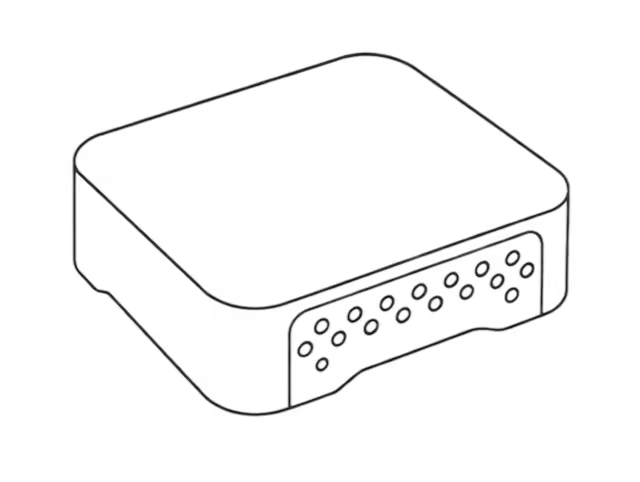
xBud
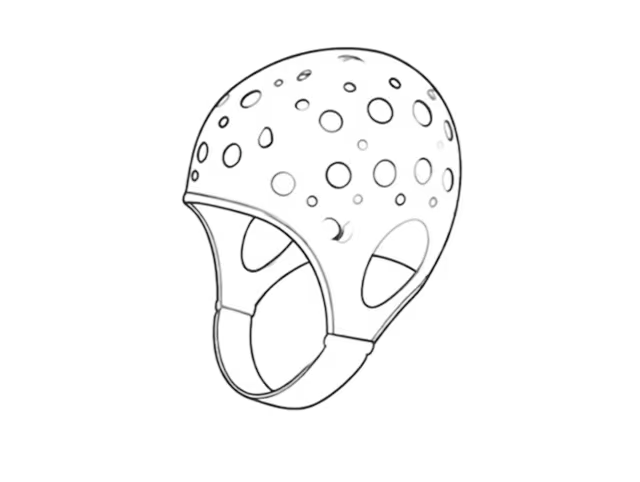
EEG Cap
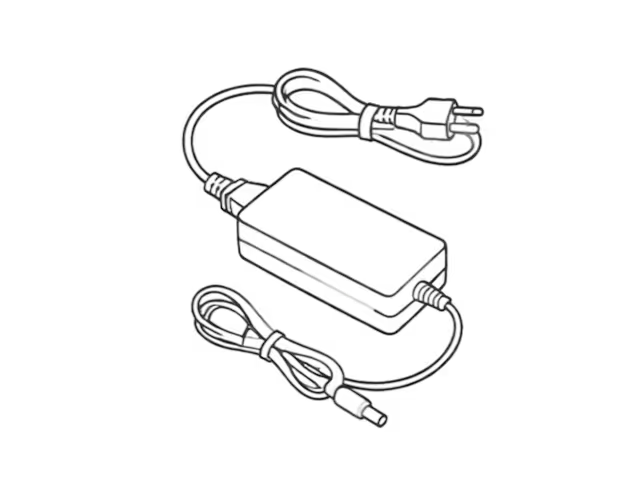
Power Adapter
Download Tech Specs
Everything you need to get started.
A complete breakdown of hardware, signal performance, and system capabilities.
xBud in Action
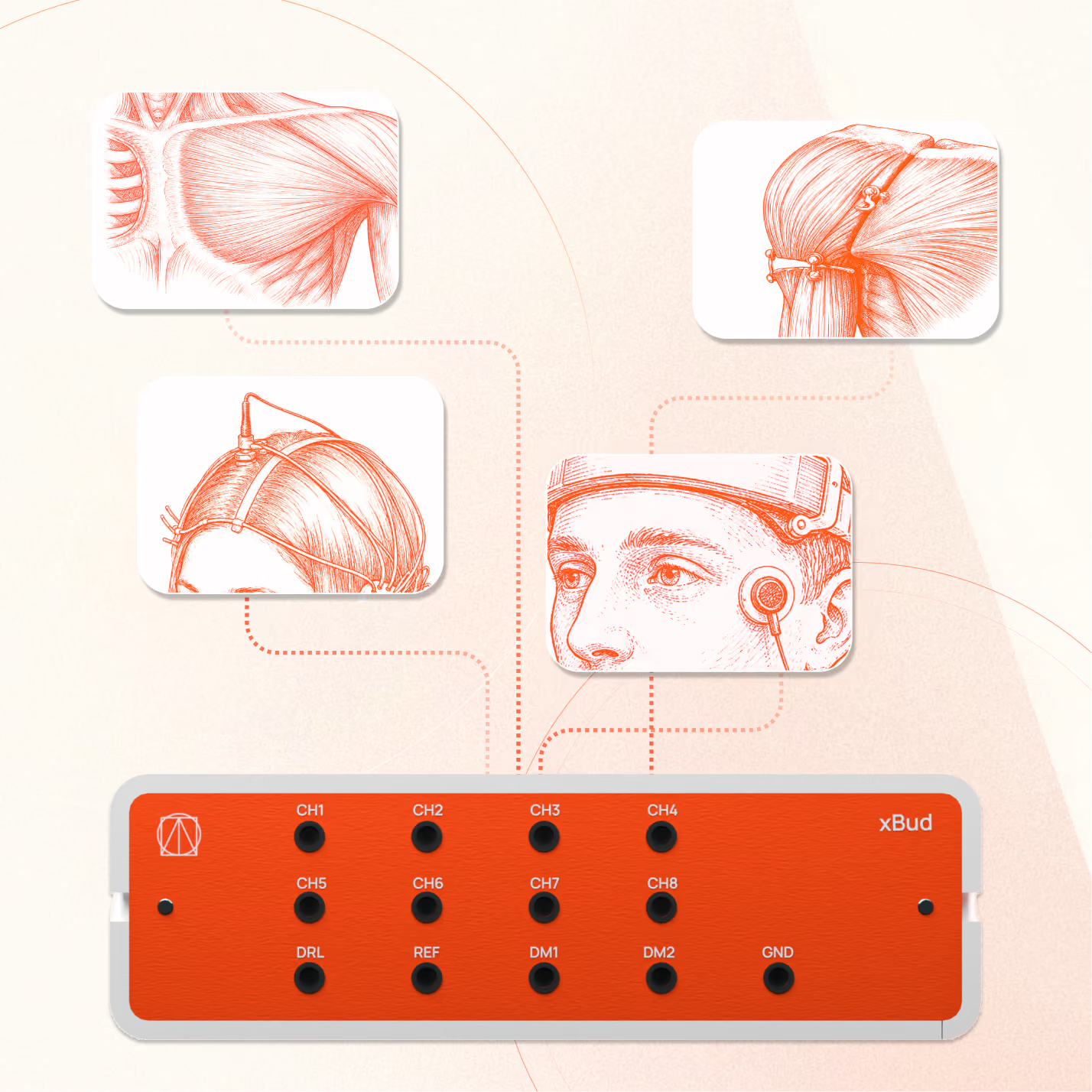
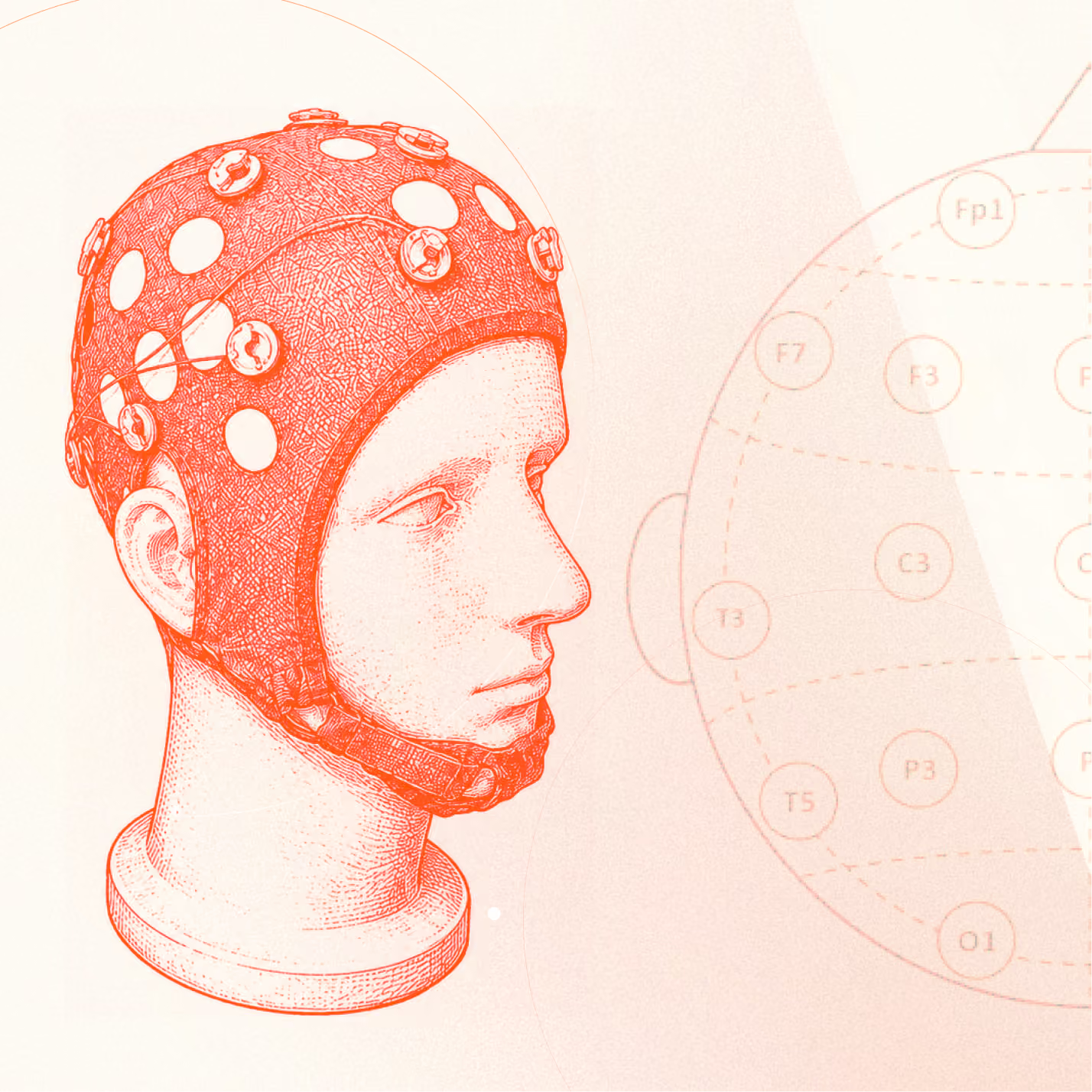
Academic Partnership
A partner across every stage of the lab
xBud connects with compatible DAQ modules for hardware markers and synchronisation, turning raw electrode signal into precisely timestamped, recorded data — validated end to end
Software that brings it to life
Transform raw biosignals into actionable insights with powerful built-in tools and expandable modules.
Connect Module
Set up and manage your headset with full access to hardware parameters. Adjust electrodes, configure fit, track orientation, and view real-time signal metrics.
Streams Module
View, record and playback EEG data streams. Apply filters in real-time to get insights.
Experiment Module
Design and run biosignal experiments with precise timing, structured protocols, and consistent metadata capture.
Pipeline Designer Module
Build custom processing pipelines with modular blocks for filtering, feature extraction, and classification.


Innovators
speak
At CBME, IIT Delhi, we offer courses across aspects of biomedical engineering, including Biomedical Research Practice, Biomedical Data Acquisition and Wearable Sensors, Neuromechanics and Signal Analysis. I believe an initiative like xBud can complement the existing academic curriculum very well by providing students with access to industry-grade hardware and real-world biosignal data. This would be particularly valuable for students who want to move beyond theoretical understanding and develop practical skills in biomedical instrumentation, signal processing, and wearable/healthcare technologies.
Dr. Naveen Kumar Singh
Assistant Professor,
Indian Institute of Technology, Delhi
As the field moves toward multimodal data acquisition, providing students with early access to such hardware helps them develop the skill sets required to handle these datasets. The simple USB data connection setup, offering up to 16 channels and supporting dry electrodes, is ideal for various research-grade data collection configurations and is much needed to enable learning and flexible research across biopotentials. Students gain the major advantages of greater customization, clearer troubleshooting, and staying close to state-of-the-art research.

Dr. Arun Sasidharan
Scientist, Centre for Consciousness Studies,
NIMHANS

FAQs
Students, instructors, and builders in neuroscience, biomedical engineering, electrical and electronics, instrumentations and data analytics/AI/ML.
A quick setup runs via BXI Studio; data exports in standard formats, so analysis happens in whatever environment the course already uses.
Run multiple units in parallel for larger cohorts. It fits the course — the course doesn't have to fit it. The tools and workflow students use are the same ones they'll encounter in industry - packaged as curriculum modules.
EEG, ECG, EMG, and EOG, via dry or gel-based Ag/AgCl electrodes.
xBud is DAQ agnostic. Any DAQ that has ± 5V analog input or higher and ± 5V digital input/output can be used. xBud has been tested with NI-USB DAQ series, NI mioDAQ series (6421 and higher), NI cDAQ.
ECG and basic EMG functions can be supported by a 14-bit DAQ. For EEG, 20-bit or higher is recommended.
Disclaimer
xBud is not a medical device and is intended for research, educational, and informational purposes only. It does not provide medical diagnosis, treatment, or professional advice. Do not rely on its outputs for medical, legal, financial, safety, educational, insurance, housing, or employment decisions. Anthriq disclaims liability arising from the use or reliance on xBud outputs.