Dry Electrodes, Real Data: The Engineering Behind Wearable EEG.
Traditional EEG needs messy gel and a lab visit. Dry electrodes are the engineering breakthrough making brain sensors wearable.

New dry EEG sensors can now match the signal quality of old gel-based electrodes, without a single drop of gel, thanks to advances in materials and circuit design.
The problem
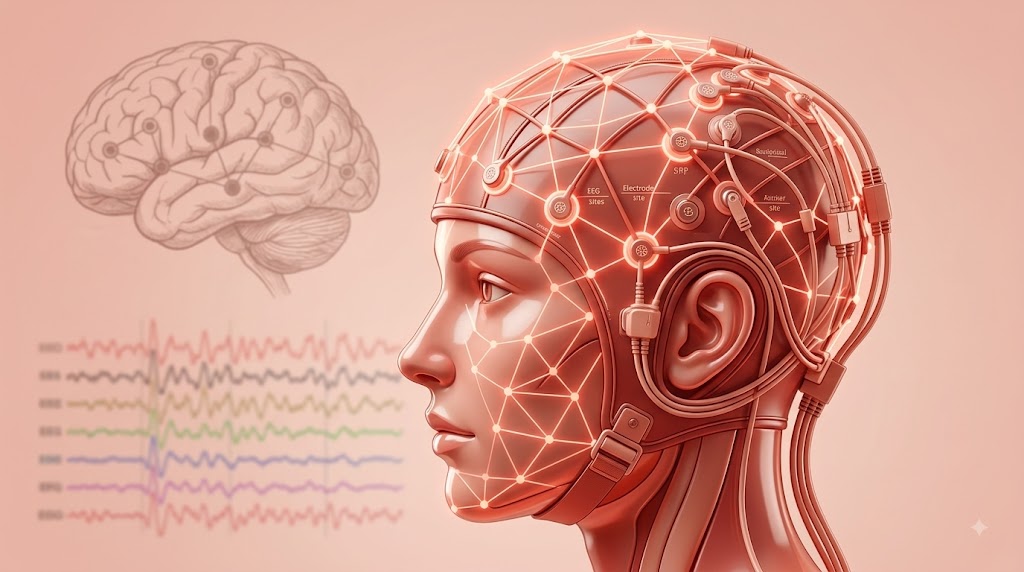
For decades, getting an accurate brain-wave reading meant a lab visit: having your scalp lightly abraded and cold, sticky gel applied under a cap of sensors. That setup : wet-gel EEG, built almost all of the clinical evidence we have about the brain, and it still works very well. But it takes about 20 minutes to prepare and isn't something anyone would wear casually. For EEG to become a wearable, everyday tool, it needs to work without the gel. And that turns out to be a harder engineering problem than it sounds.
Why it matters
Gel works because skin, on its own, doesn't conduct electricity well, and gel bridges that gap so the sensor can pick up the brain's very faint signals clearly. Without gel, that gap becomes an obstacle. Researchers are closing it two ways: building far more sensitive amplifiers that can pull a clean signal through drier, poorer skin contact, and redesigning the electrode itself,; tiny sensors with microscopic needle- or pillar-shaped tips that gently reach past the outer, dead layer of skin without touching any nerve endings, which is why they don't hurt.
One 2025 study put this to a direct test: the same group of people was recorded twice, once with old-style gel electrodes and once with new dry ones, while doctors who didn't know which recording was which judged the results. A separate 2025 study tested tiny needle-shaped sensors that matched gel-electrode quality for brain signals, and beat standard dry sensors for muscle signals too — all without gel.
Real-world examples
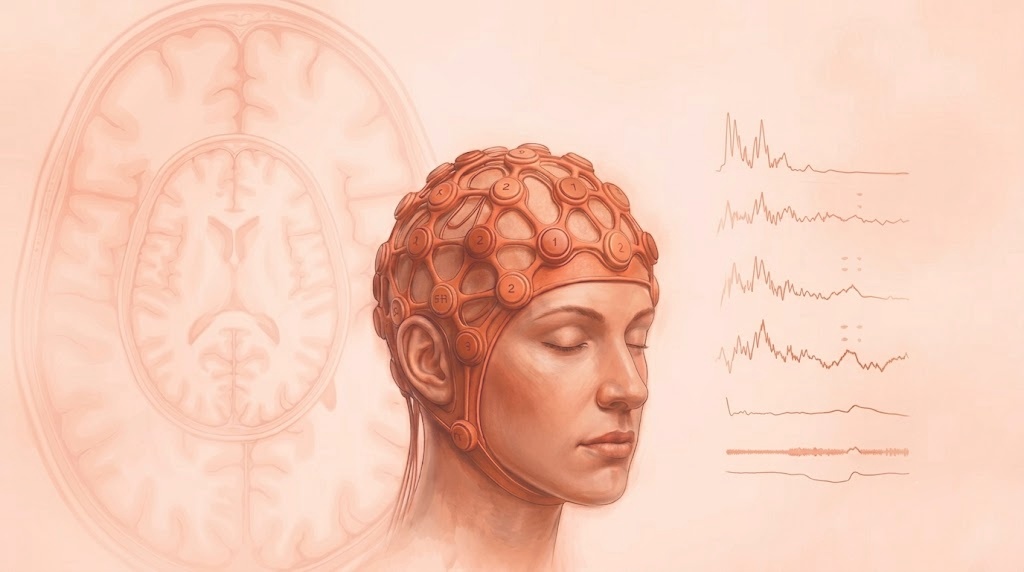
This engineering work is what makes wearable EEG usable outside a lab. Recent reviews point to dry-sensor EEG already being tested for detecting driver drowsiness, tracking focus and fatigue, and reading the specific brain-wave patterns used in stroke-rehab devices,; use cases that simply don't work with a gel-based system.
Where this is heading
Wet-gel EEG still wins on raw signal quality in a hospital setting, and that isn't changing soon. But for everyday use,; tracking stroke recovery at home, sports-performance training, day-to-day mental-health monitoring, dry sensors are closing the gap fast enough that they're now showing up in real products, not just research papers.
Know More
Further reading




Subscribe to Neurotech Pulse
A roundup of the latest in neurotech covering breakthroughs, products, trials, funding, approvals, and industry trends straight to your inbox.