Introduction to Biosignals: The Language of the Human Body
The human body is constantly generating data—electrical impulses, chemical fluctuations, and mechanical movements—that provide deep insights into our bodily functions, and cognitive states. These measurable physiological signals, known as biosignals, serve as the body's natural language, allowing us to interpret and interact with its inner workings. From monitoring brain activity to assessing muscle movement, biosignals are fundamental to understanding human physiology and expanding the frontiers of human-machine interaction. But what exactly are biosignals? How are they classified, and why do they matter? In this blog, we will explore the different types of biosignals, the science behind their measurement, and the role they play in shaping the future of human health and technology.
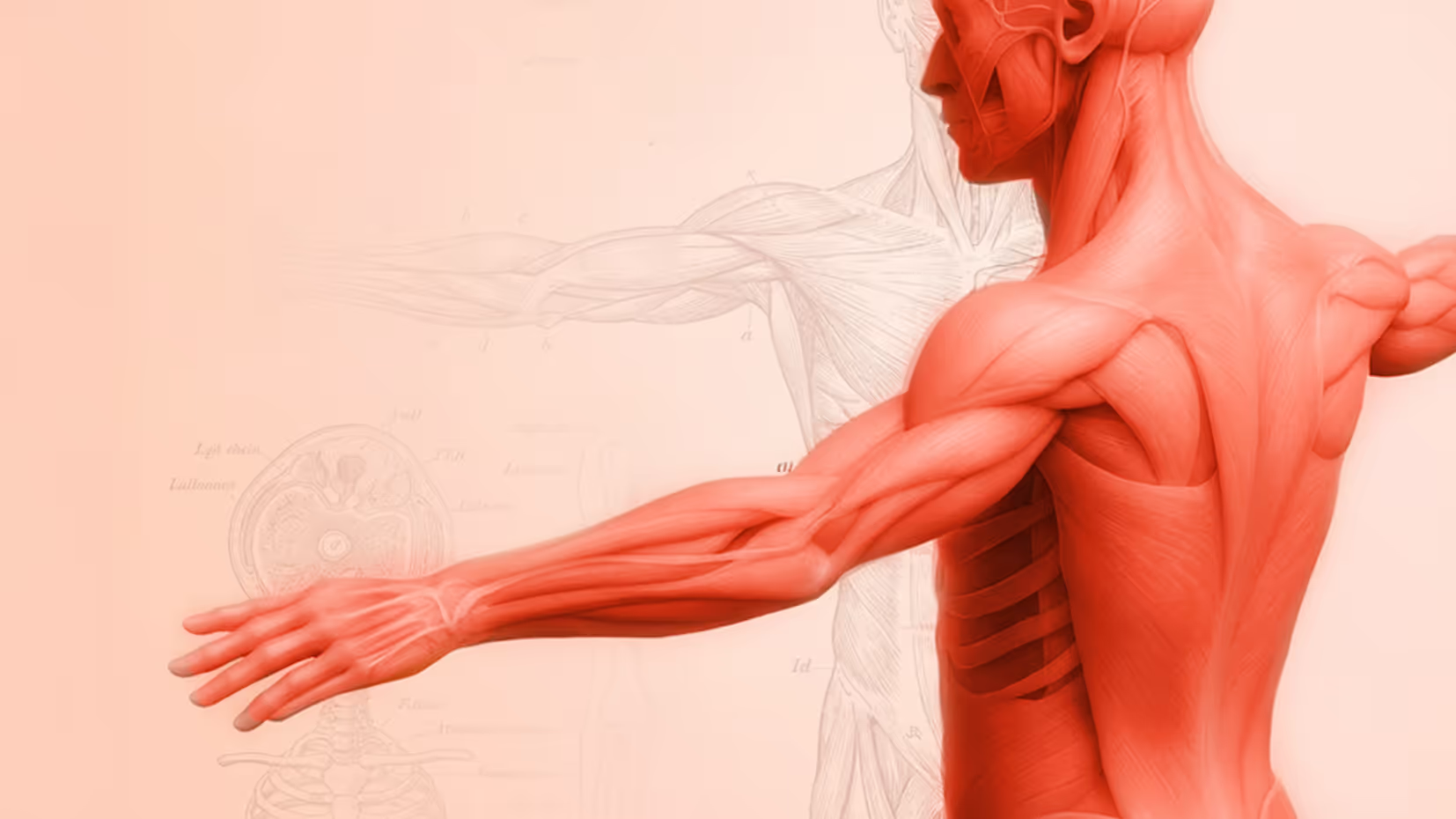
What are Biosignals?
Biosignals refer to any measurable signal originating from a biological system. These signals are captured and analyzed to provide meaningful information about the body's functions. Traditionally used in medicine for diagnosis and monitoring, biosignals are now at the forefront of research in neurotechnology, wearable health devices, and human augmentation.
The Evolution of Biosignal Analysis
For centuries, physicians have relied on pulse measurements to assess a person’s health. In ancient Chinese and Ayurvedic medicine, the rhythm, strength, and quality of the pulse were considered indicators of overall well-being. These early methods, while rudimentary, laid the foundation for modern biosignal monitoring.
Today, advancements in sensor technology, artificial intelligence, and data analytics have transformed biosignal analysis. Wearable devices can continuously track heart rate, brain activity, and oxygen levels with high precision. AI-driven algorithms can detect abnormalities in EEG or ECG signals, helping diagnose neurological and cardiac conditions faster than ever. Real-time biosignal monitoring is now integrated into medical, fitness, and neurotechnology applications, unlocking insights that were once beyond our reach.
This leap from manual pulse assessments to AI-powered biosensing is reshaping how we understand and interact with our own biology.
Types of Biosignals:-
Biosignals come in three main types
- Electrical Signals: Electrical signals are generated by neural and muscular activity, forming the foundation of many biosignal applications. Electroencephalography (EEG) captures brain activity, playing a crucial role in understanding cognition and diagnosing neurological disorders. Electromyography (EMG) measures muscle activity, aiding in rehabilitation and prosthetic control. Electrocardiography (ECG) records heart activity, making it indispensable for cardiovascular monitoring. Electrooculography (EOG) tracks eye movements, often used in vision research and fatigue detection.
- Mechanical Signals: Mechanical signals arise from bodily movements and structural changes, providing valuable physiological insights. Respiration rate tracks breathing patterns, essential for sleep studies and respiratory health. Blood pressure serves as a key indicator of cardiovascular health and stress responses. Muscle contractions help in analyzing movement disorders and biomechanics, enabling advancements in fields like sports science and physical therapy.
- Chemical Signals: Chemical signals reflect the biochemical activity within the body, offering a deeper understanding of physiological states. Neurotransmitters like dopamine and serotonin play a critical role in mood regulation and cognitive function. Hormone levels serve as indicators of stress, metabolism, and endocrine health. Blood oxygen levels are vital for assessing lung function and metabolic efficiency, frequently monitored in medical and athletic settings.
How Are Biosignals Measured?
After understanding what biosignals are and their different types, the next step is to explore how these signals are captured and analyzed. Measuring biosignals requires specialized sensors that detect physiological activity and convert it into interpretable data. This process involves signal acquisition, processing, and interpretation, enabling real-time monitoring and long-term health assessments.
- Electrodes & Wearable Sensors
Electrodes measure electrical biosignals like EEG (brain activity), ECG (heart activity), and EMG (muscle movement) by detecting small voltage changes. Wearable sensors, such as smartwatches, integrate these electrodes for continuous, non-invasive monitoring, making real-time health tracking widely accessible.
- Optical Sensors
Optical sensors, like pulse oximeters, use light absorption to measure blood oxygen levels (SpO₂) and assess cardiovascular and respiratory function. They are widely used in fitness tracking, sleep studies, and medical diagnostics.
- Pressure Sensors
These sensors measure mechanical biosignals such as blood pressure, respiratory rate, and muscle contractions by detecting force or air pressure changes. Blood pressure cuffs and smart textiles with micro-pressure sensors provide valuable real-time health data.
- Biochemical Assays
Biochemical sensors detect chemical biosignals like hormones, neurotransmitters, and metabolic markers. Advanced non-invasive biosensors can now analyze sweat composition, hydration levels, and electrolyte imbalances without requiring a blood sample.
- Advanced AI & Machine Learning in Biosignal Analysis
Artificial intelligence (AI) and machine learning (ML) have transformed biosignal interpretation by enhancing accuracy and efficiency. These technologies can detect abnormalities in EEG, ECG, and EMG signals, helping with early disease diagnosis. They also filter out noise and artifacts, improving signal clarity for more precise analysis. By analyzing long-term biosignal trends, AI can predict potential health risks and enable proactive interventions. Additionally, real-time AI-driven feedback is revolutionizing applications like neurofeedback and biofeedback therapy, allowing for more personalized and adaptive healthcare solutions. The integration of AI with biosignal measurement is paving the way for smarter diagnostics, personalized medicine, and enhanced human performance tracking.

Figure : The image provides an overview of biosignals detectable from different parts of the human body and their corresponding wearable sensors. It categorizes biosignals such as EEG, ECG, and EMG, demonstrating how wearable technologies enable real-time health monitoring and improve diagnostic capabilities.
The Future of Biosignals
As sensor technology and artificial intelligence continue to evolve, biosignals will become even more integrated into daily life, shifting from reactive healthcare to proactive and predictive wellness solutions. Advances in non-invasive monitoring will allow for continuous tracking of vital biomarkers, reducing the need for clinical testing. Wearable biosensors will provide real-time insights into hydration, stress, and metabolic health, enabling individuals to make data-driven decisions about their well-being. Artificial intelligence will play a pivotal role in analyzing complex biosignal patterns, enabling early detection of diseases before symptoms arise and personalizing treatments based on an individual's physiological data.
The intersection of biosignals and brain-computer interfaces (BCIs) is also pushing the boundaries of human-machine interaction. EEG-based BCIs are already enabling users to control digital interfaces with their thoughts, and future developments could lead to seamless integration between the brain and external devices. Beyond healthcare, biosignals will drive innovations in adaptive learning, biometric authentication, and even entertainment, where music, lighting, and virtual experiences could respond to real-time physiological states. As these technologies advance, biosignals will not only help us understand the body better but also enhance human capabilities, bridging the gap between biology and technology in unprecedented ways.
Further reading





Subscribe to Neurotech Pulse
A roundup of the latest in neurotech covering breakthroughs, products, trials, funding, approvals, and industry trends straight to your inbox.