Brain Data as a Biometric: Balancing Innovation, Privacy, and Security.
Brain data is emerging as a powerful new biometric, driven by rapid advances in EEG wearables and neurotechnology. As these systems move beyond labs into everyday use, they raise urgent questions about privacy, security, and how neural signals are interpreted and protected. This blog explores the balance between innovation and responsibility in a world where brain data is becoming both measurable and meaningful.
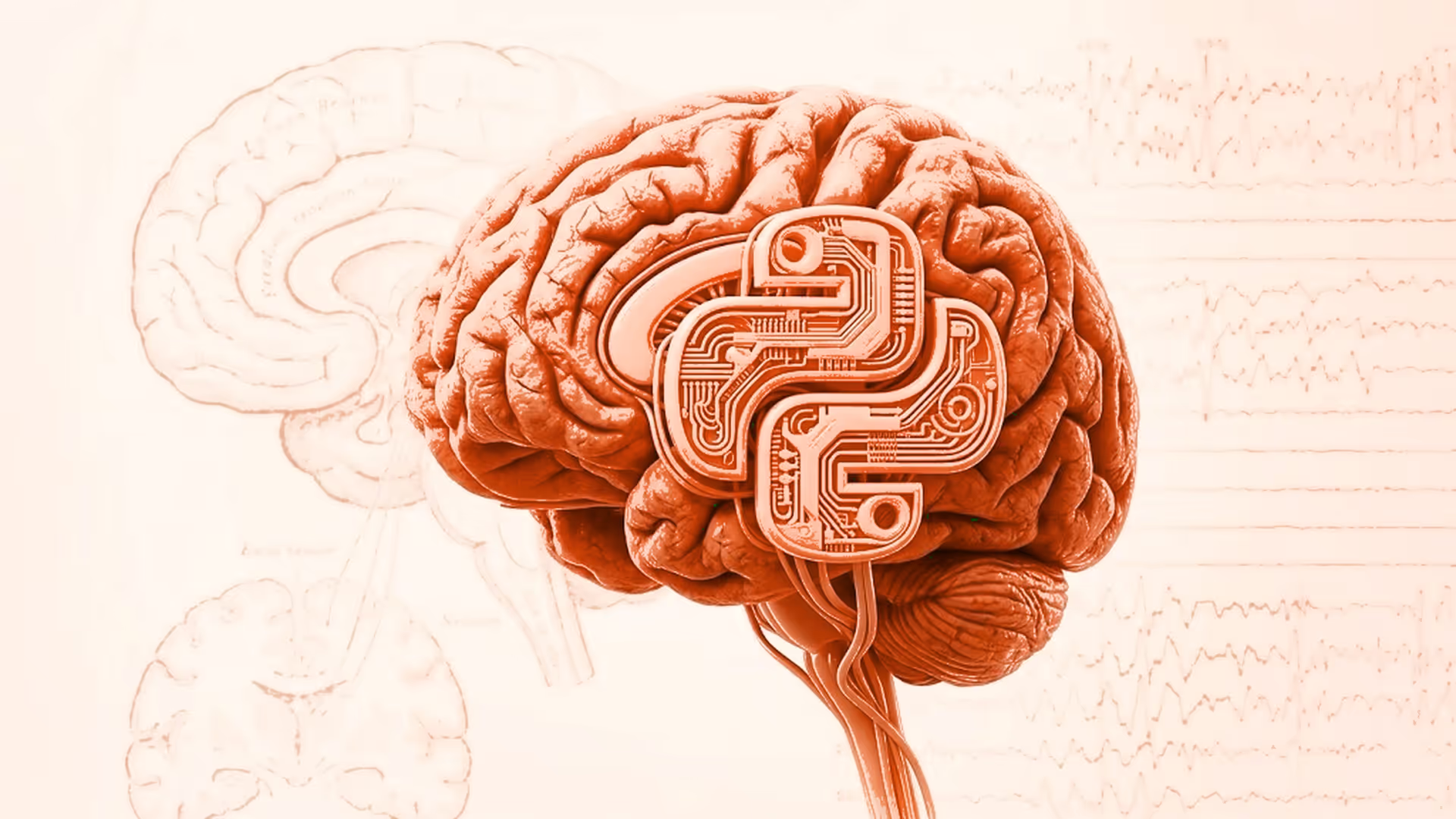
For years, debates around digital privacy have focused on cameras, microphones, and GPS trackers.
But a new category of data collection is emerging—one that doesn’t just observe behaviour, but can infer what’s happening inside the brain.
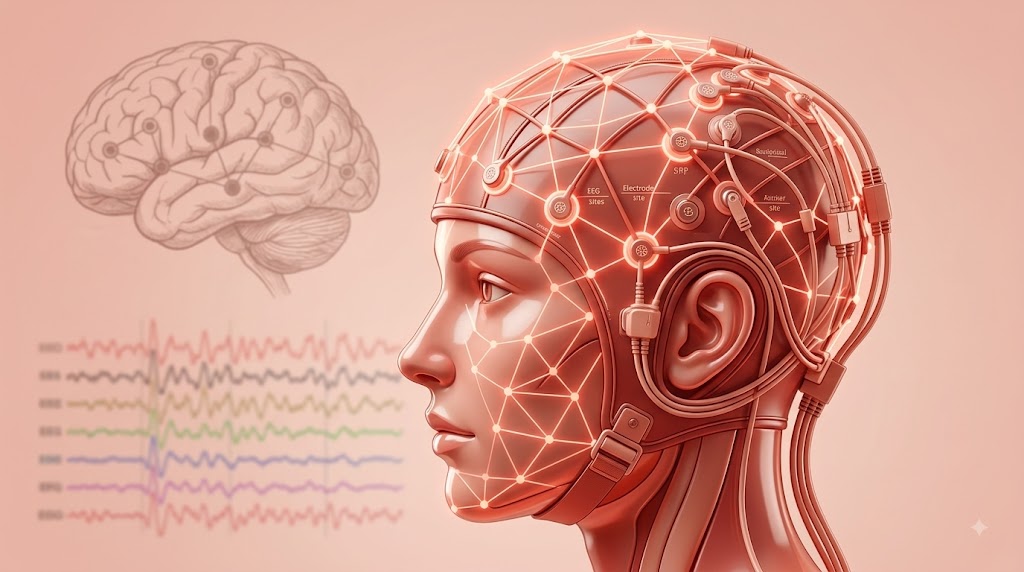
This shift is no longer theoretical. Consumer EEG devices—like meditation headbands and focus-tracking wearables—are already in widespread use. Systems developed by companies are capable of capturing real-time brain activity and translating it into metrics like attention, calm, or cognitive engagement.
At the same time, brain-computer interface research—driven by groups like DARPA and emerging neurotech labs—is pushing toward systems that can interpret user intent directly from neural signals.
As these technologies move into everyday environments, a critical question emerges: What happens when brain data becomes a biometric?
What makes neural data fundamentally different
Traditional biometrics—fingerprints, facial recognition, iris scans—are relatively static. Neural data is not.
Brain activity is:
- Dynamic (changing moment to moment)
- Context-dependent (shaped by environment and task)
- Deeply inferential
An EEG signal doesn’t just capture electrical activity—it can be used to infer:
- cognitive load
- emotional response
- attention and engagement levels
This is exactly where current research is accelerating. Recent studies in neurotechnology and machine learning are increasingly focused on decoding mental states from EEG, with applications spanning attention tracking, emotion recognition, and fatigue detection.
At the same time, a parallel line of research is exploring something more concerning: brain-based identification.
Studies have shown that EEG patterns—particularly when recorded over time—can act as unique neural signatures, stable enough to distinguish individuals with high accuracy. Unlike a password, this is not something you can change.
The identity inference problem
One of the biggest risks in neurotechnology is not what is measured—but what can be inferred later.
A device may claim to track a single metric—focus, calm, or stress.
But the underlying neural data is far richer.
As machine learning models improve, the same dataset could be reanalyzed to extract:
- emotional responses to stimuli
- patterns of attention and distraction
- cognitive fatigue or overload
This creates a long-term risk: Data collected for one purpose today may reveal far more tomorrow.
This concern is already shaping research directions, with increasing focus on:
- privacy-preserving machine learning for EEG
- limiting secondary inference from neural datasets
Security risks in real systems
Neurotechnology devices introduce a new class of data security requirements due to the nature of neural signals—high-dimensional, continuously streamed, and often transmitted across wireless and cloud-based systems.
Early research and system analyses in consumer neurotech have helped surface important opportunities to further strengthen areas such as data encryption and transmission protocols.
In response, a growing ecosystem of institutions and standards bodies—including initiatives within the IEEE Neuroethics and neurotechnology working groups, ISO biometric standards committees, and large-scale neuroscience programs like the NIH BRAIN Initiative—are actively contributing to more robust frameworks for secure neural data handling.
Even when datasets are anonymized, research highlights that combining neural signals with metadata (such as timestamps or device identifiers) requires careful system design to ensure long-term privacy resilience.
This has led to meaningful progress in areas such as:
- secure neural data pipelines
- edge processing (keeping data on-device where possible)
- encrypted signal transmission architectures
Together, these directions are shaping a more secure foundation for next-generation neurotechnology systems.
The regulatory gap
Despite its sensitivity, neural data sits in a grey zone.
Most privacy laws were not designed for technologies that can infer mental states.
- In United States, there is no comprehensive federal biometric privacy law covering neural data
- In European Union, GDPR may apply—but enforcement specific to neurotechnology remains limited
- Devices positioned as “wellness” tools often bypass stricter medical regulations
At the same time, new frameworks are beginning to emerge.
The NeuroRights Initiative and similar efforts in countries like Chile are pushing for legal protections around:
- mental privacy
- cognitive liberty
- protection from neural data misuse
This signals a broader shift: brain data is beginning to be treated as something fundamentally different.
What needs to change
As neurotechnology scales, security and governance cannot be an afterthought.
Key areas of focus are already emerging across research and policy:
- Classifying neural data as sensitive biometric data
- End-to-end encryption for all neural data flows
- Strict limits on secondary data use and model retraining
- Transparency in how AI models interpret brain signals
- Independent audits of consumer neurotechnology systems
These are not hypothetical safeguards—they are increasingly being discussed across neurotech research, cybersecurity, and policy communities.
The bigger question
For most of history, the brain has been private by default. Technology could not access its signals without invasive procedures or controlled lab environments.
That assumption is now changing. As EEG devices and brain-computer interfaces become more integrated into daily life—from meditation and productivity to immersive computing—the boundary between external behavior and internal state is beginning to blur.
The challenge ahead is not just technical. It is structural:
- how we define ownership of neural data
- how we regulate inference, not just collection
- how we protect something that cannot be reset or replaced
Because unlike a password or a fingerprint, a neural signature is both identifiable, & deeply revealing. And once exposed, it cannot be changed.
Further reading





Subscribe to Neurotech Pulse
A roundup of the latest in neurotech covering breakthroughs, products, trials, funding, approvals, and industry trends straight to your inbox.